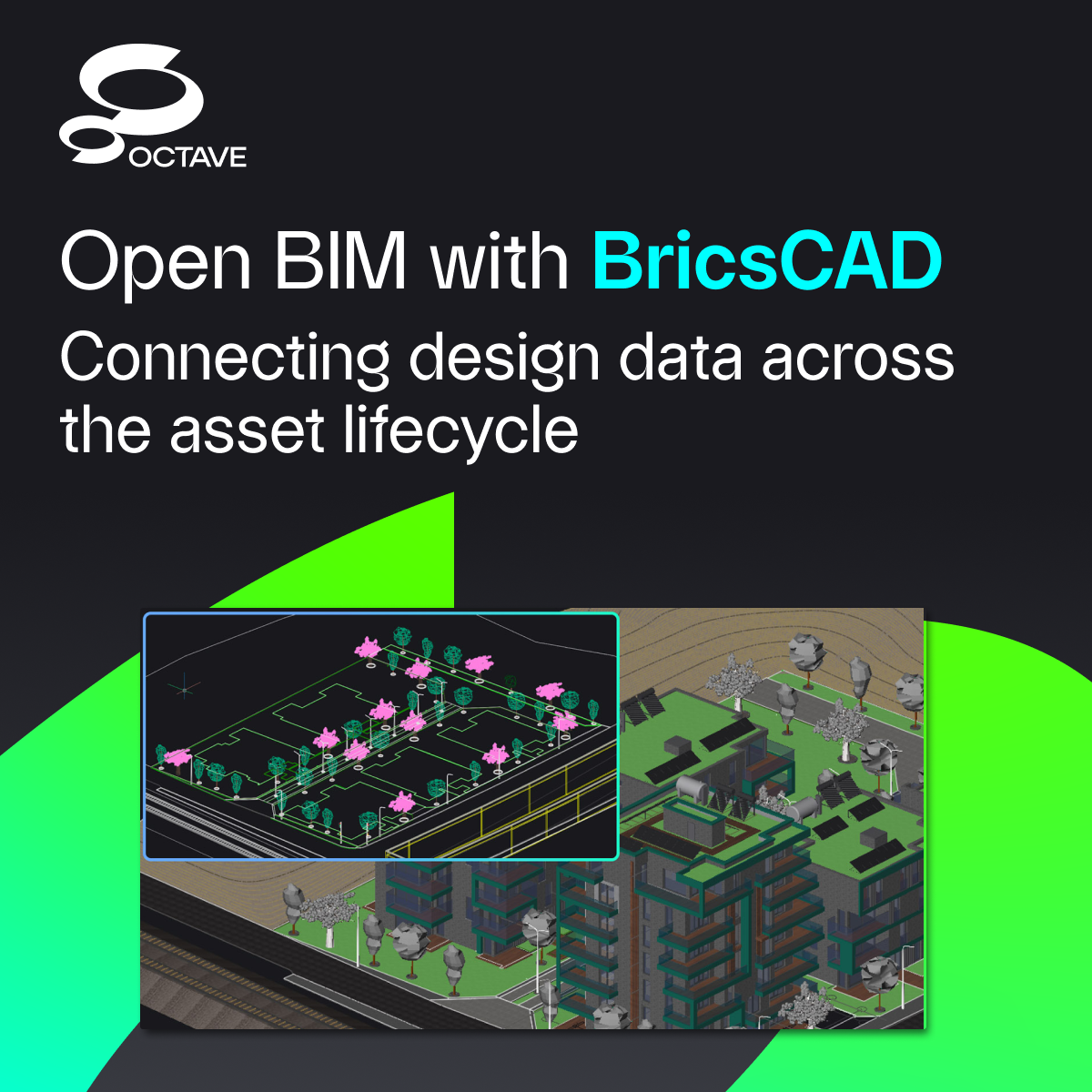
Construction projects today rely on a wide range of software tools. To keep information flowing from design through construction and into operations, project teams need open interfaces and shared data formats. Open BIM is designed to make that possible – regardless of which software individual stakeholders use.
Architects, engineers, contractors and operators rarely work within the same software environment. Yet models, geometry and technical information still need to move between them with as little friction and data loss as possible. This is one of the central challenges of digital construction: success depends not just on the quality of an individual model, but on whether the information it contains can be used across different systems and organisations.
Open BIM addresses this by relying on open standards and interoperable formats. The aim is to make geometry, technical information and lifecycle data accessible across disciplines without forcing every project participant onto a single software platform.
Octave BricsCAD BIM is one example of how this can work in practice. The software can turn existing 2D drawings into 3D models and generate digital as-built models from point-cloud scans. It automatically classifies geometry as IFC objects and assigns the relevant properties. AI-assisted tools can increase both the level of detail and the amount of information contained in the model, while partner solutions can add discipline-specific data. The models can then be exported as IFC files and shared with other participants in the Open BIM process.
This becomes particularly useful on projects where information comes from many different sources. Scaffolding engineering specialist Catari, for example, creates or imports 3D building models and works with project data in formats including DWG, RVT, IFC, PDF and ACIS SAT. Based on this information, scaffolding designs can be adapted to the specific building and site conditions. The models can then be exported as IFC files for use during on-site assembly – without the need for separate conversion tools.
The example highlights what Open BIM is really about: not a single file format, but continuous information flows. Data should remain usable wherever it is needed – from design and specialist planning through construction and, ultimately, into operation.
At BIM World, Octave will showcase BricsCAD BIM together with partner solutions for building and façade design, building services, facility management and infrastructure. Visitors can find the company at Booth 17 in the ground-floor foyer.